
Magic Piano:EDM Music game
Happy Go GameMusic
3.937.00 Reviews
- Version
- 1.7.0
- Installs
- 10.00M
- Age Rating
- Mature 17+
Screenshots
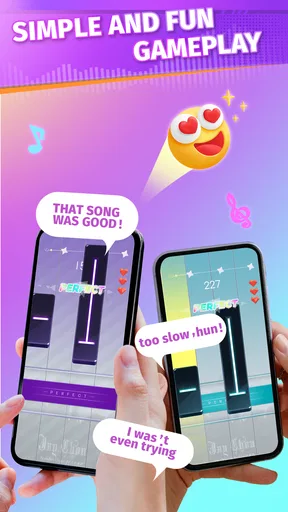
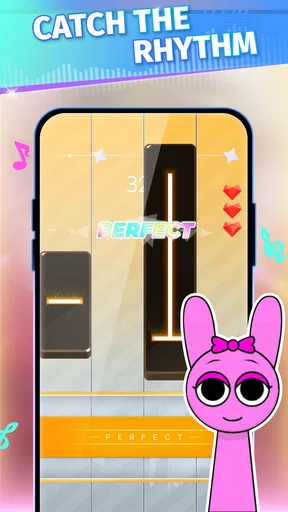
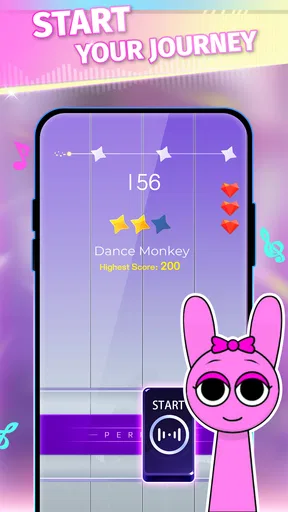
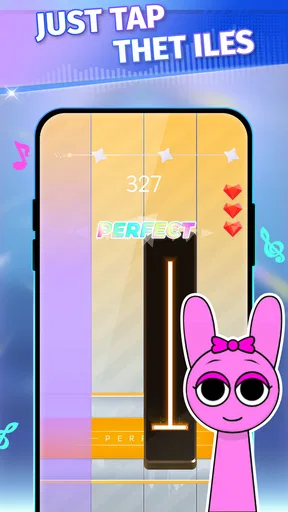
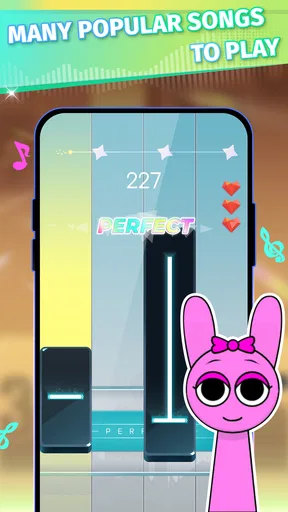
Our Review of Magic Piano:EDM Music game
 Analysis by Appyee
I spent time with Magic Piano:EDM Music as a quick rhythm game rather than treating it like a serious piano-learning tool. That distinction matters. The game is built around tapping along with music, so its appeal comes from timing, concentration, and the small satisfaction of getting through a song cleanly. It is free to start, made by Happy Go Game, and sits in the music-game space rather than trying to replace a keyboard lesson or a full music-production app.
My first impression was that it works best in short sessions. I could pick it up when I had a few spare minutes, focus on the screen, and put it down without needing to remember a complicated story or a long-term strategy. The store summary describes it as a way to dive into rhythm and feel the music, and that is a fair description of the basic experience, although the enjoyable part comes from learning the visual timing rather than simply listening.
How Magic Piano:EDM Music fits into everyday play
The most natural household scenario is a shared phone or tablet that several people use at different moments. One person might play while waiting for dinner, another might try a few songs after school, and someone else may use it as a quick distraction during a break. Because the core interaction is immediate, it does not demand the same commitment as a traditional console game. That makes it easy to pass around, but it also means that each player should understand that progress, settings, and purchases may not feel private or separate on a shared device.
I found the game more suitable for one player at a time than for a group session. The screen is the focus, and rhythm games depend on personal timing, so several people watching can become distracting. Still, a household can make it a light coordination activity: one player chooses a track, another watches the pattern, and they compare which sections caused mistakes. That kind of informal turn-taking works better than expecting everyone to play simultaneously.
The simple format is also useful for introducing someone to rhythm games. A person who has never played a music title can understand the basic goal quickly: watch the notes, tap in time, and try to keep control as the song continues. I would not present it as a lesson in reading music, finger technique, or piano performance. It gives the feeling of playing along with a song, but the skill being tested is screen timing.
That difference helps set expectations for children, teenagers, and adults sharing the same device. An adult looking for a relaxing music toy may enjoy it immediately, while someone expecting realistic piano keys or a broad songwriting tool could be disappointed. Before installing it for a household, I would explain that “piano” describes the game’s presentation and interaction, not a substitute for an instrument.
Starting without turning the first session into a commitment
The game is free, which lowers the barrier to trying it. That is useful when several people in a household want to see whether the style suits them before anyone spends money. At the same time, the presence of in-app purchases means I would not treat a shared device as automatically purchase-free. The listed purchase range runs from a few dollars to amounts in the mid-twenties per item, so the person responsible for the device should review the platform’s purchase settings before handing it over.
I prefer setting that boundary before the first play session rather than explaining it after an accidental tap. A short conversation is enough: try the free experience, ask before buying anything, and do not assume that a button related to a song or item is part of the free portion. This is especially important when younger users share a phone with an adult, because a rhythm game’s quick pace can encourage tapping through prompts without carefully reading them.
There is another practical boundary: use headphones thoughtfully. Music games are more enjoyable when the timing and sound are clear, but headphones can make a player less aware of what is happening around them. In a shared room, I would keep the volume comfortable and avoid using the game while walking, crossing a street, or doing anything that needs full attention. That is not a special feature of this title; it is simply sensible behavior for a game that asks the player to watch and listen closely.
For a shared tablet, I would also decide where the device stays between turns. A stable surface is preferable to passing it around while a song is active. Rhythm play depends on consistent hand position, and an accidental bump can look like a missed note. This small arrangement improves fairness when people are comparing results, because one player is less likely to be affected by an awkward grip or a moving screen.
Coordination matters more than competition at home
Magic Piano:EDM Music can create a friendly challenge, but I think households get more from it when they focus on improvement rather than declaring a permanent winner. A good routine is to let each person choose a song, allow one practice attempt, and then take a second run. That makes the comparison more meaningful because everyone has had a chance to understand the note flow.
A useful tip is to avoid judging a player by a single difficult section. Rhythm games often feel easy at the beginning and suddenly demand more attention as patterns become denser or faster. If a child or casual player struggles, I would first watch whether the problem is visual overload, unfamiliar timing, or simply holding the device uncomfortably. The answer changes what helps. A steadier grip may solve a physical issue, while repeated short attempts are better for learning a pattern.
I also found that spectators can help when they stay quiet during the active part of a song. Calling out corrections or laughing at mistakes usually makes timing worse. A better approach is to discuss the difficult moment afterward: did the player rush, hesitate, or lose track after missing one note? This turns a quick game into a small exercise in concentration without pretending it is formal instruction.
For adults sharing with teenagers, the game can be an easy low-pressure activity because it does not require anyone to reveal personal information or perform in front of strangers simply to enjoy the basic interaction. However, I would still keep the device owner involved in any account, store, or purchase decisions. Shared entertainment is easiest when the person who manages the device also explains the boundaries clearly.
One trade-off is that a household may not value the same thing in the game. A music fan may care about the feel of a particular track, while a competitive player may care more about accuracy and replaying a difficult passage. If the available music does not match everyone’s taste, the game may quickly become a personal pastime instead of a family activity. That is not a flaw for individual use, but it limits how long a shared-device group may stay interested.
Age context and trust on a shared device
The age rating is Mature 17+, so I would not install this casually for a young child just because the controls look simple. The rating should be part of the household conversation before anyone plays. Parents and guardians can decide whether the game fits their teenager, but I would not assume that a music-focused presentation automatically makes it suitable for every age group.
This is also where trust and account boundaries become important. If an adult and a teenager use the same device, the adult should make it clear whose store account is active and who has permission to approve purchases. A free download does not remove the need for that discussion. I would keep payment authorization with the account owner and avoid letting a child treat the device as if every visible option were automatically approved.
The game runs on Android versions starting with 7.0, which makes it accessible on a broad range of older Android devices. Even so, compatibility is not the same as a guarantee of an equally comfortable session on every phone. Screen size, touch response, audio quality, and the device’s general condition can affect a timing game. On a smaller or older handset, I would test a short session before deciding whether it is suitable for regular shared use.
The current version is 1.7.0, and I would keep the app updated through the normal store process when possible. On a shared device, updates are worth coordinating rather than starting just as someone is ready to play. If storage or mobile data is limited, an adult can choose a convenient time for maintenance. This is a small household habit, but it avoids turning a planned game session into an unexpected interruption.
The game has reached more than ten million installs and holds an average rating of about 3.9 from roughly twelve thousand ratings. Those figures suggest that many people are willing to try the format, but they do not tell me that every player will enjoy it. A rhythm game can receive mixed reactions because timing sensitivity, music preference, and touch-screen comfort vary widely. I would read the rating as evidence of a substantial audience, not as a promise of a perfect fit.
Where it stands beside other music games
Compared with a conventional piano-learning app, this game is easier to approach and less intimidating. You do not need a keyboard, music theory, or a quiet practice plan to begin tapping. The trade-off is that the skills do not transfer directly to playing piano. If your goal is to learn notes, chords, posture, or two-hand coordination on a real instrument, a dedicated learning app or teacher is the better choice.
Compared with a music-streaming app, it asks more of you. Streaming lets you relax and listen, while this game makes you pay attention to the screen and react to changing patterns. That can make a familiar track feel active, but it is not ideal when you simply want background music. I would choose this title for focused play, not for cooking, studying, or any situation where the phone should remain secondary.
Compared with deeper rhythm games, its attraction is the directness of the piano-style tapping. Players who want elaborate character systems, story progression, large competitive layers, or detailed customization may find the experience too narrow. On the other hand, that narrow focus is exactly why it works for a quick break. There are fewer mental steps between opening the game and playing a song.
One of my more useful observations is that the game rewards a controlled setup more than frantic tapping. Before beginning, I would place the phone flat or hold it securely, use a comfortable brightness level, and make sure notifications will not interrupt the screen. I would also start with a song that feels manageable rather than immediately choosing the most demanding option. This reduces avoidable mistakes and gives a clearer sense of whether the timing itself suits you.
Another practical tip is to stop after a few failed attempts instead of forcing a long session. When concentration drops, repeated misses can make the game feel unfair even when the real problem is fatigue. A brief pause, a change of grip, or returning later often tells you more than ten rushed retries. This matters in a household because frustration can spread quickly when several people are waiting for a turn.
Who should try it, and who should skip it
I would recommend it to someone who enjoys tap-based music games, wants a free way to sample the format, and likes improving through repetition. It is also a reasonable pick for an adult who wants a compact game that can be played in short bursts without learning a large ruleset. A teenager may enjoy it as a casual challenge, provided the Mature 17+ rating and purchase boundaries have been considered by the responsible adult.
I would be more cautious about recommending it to a young child, a person seeking genuine piano education, or anyone who dislikes retrying a section until their timing improves. I would also skip it if the main goal is passive listening or if the household cannot agree on who controls purchases on the shared device. Those are not minor details; they directly affect whether the game feels convenient or troublesome.
People with touch-screen sensitivity or limited patience for visual repetition may find the central loop tiring. The game’s strength is its focused interaction, and that same focus becomes a limitation when you want variety in the form of play. It is not the app I would choose for a broad family game night where everyone needs a different role or where players expect cooperative controls.
My household verdict after using it
For me, Magic Piano:EDM Music works as a compact rhythm game with a clear place in a shared-device household, but only when expectations are set early. The free entry makes casual testing easy, and the piano-style tapping gives music fans an active alternative to simply pressing play. Happy Go Game has kept the concept approachable enough for quick turns, which is its biggest practical strength.
Its limitations are equally clear. The Mature 17+ rating requires adult attention, in-app purchases call for firm account boundaries, and the game should not be confused with piano education. It is also better for individual turns than true group play, and its value depends heavily on whether the music and timing style appeal to each person using the device.
My recommendation is to try it with a simple household plan: the account owner handles purchases and updates, players take turns on a stable device, and everyone treats the game as a timing challenge rather than a lesson. If that matches what you want, the free version is an easy way to find out whether the rhythm feels satisfying. The best reason to choose it is focused, low-commitment music play—not realistic piano training or a full family multiplayer experience.
Verdict
Strengths of Magic Piano:EDM Music game
- Large library of EDM tracks keeps gameplay varied.
- Simple tap-based controls are easy for beginners to learn.
- Short levels make it convenient for quick gaming sessions.
- Bright visual effects match the energetic music style.
- Progression and challenges add motivation beyond casual play.
Limitations of Magic Piano:EDM Music game
- Some songs or features may require in-app purchases.
- Ads can interrupt the experience between songs.
- Fast note patterns may feel difficult on smaller screens.
- Gameplay can become repetitive after extended sessions.
- An internet connection may be needed for some content.
Other Releases by Happy Go Game
View All
Antistress Games: Calm&Relax
Arcade4.3

Subway Runner: Parkour Game
Arcade4.0
Similar Picks in This Category
View All
Tiles Hop Music & Ball Game
AMANOTES PTE. LTD.4.3

Magic Tiles 3™ - Piano Game
AMANOTES PTE. LTD.4.6

Real Piano
Bilkon3.7

Piano Game: Classic Music Song
Dream Tiles Piano Game Studio4.0

Smash Colors: Music Ball Rush
BADSNOWBALL HONGKONG LIMITED4.2

Piano Music Go-EDM Piano Games
Joy Journey Music Games4.5
Frequently Asked Questions
What is Magic Piano: EDM Music, and how does the gameplay work?
Magic Piano: EDM Music is a rhythm game in which you tap falling tiles or notes in time with electronic dance music. The objective is to maintain accurate timing, complete songs, and achieve high scores without missing too many notes. As the difficulty increases, the tiles move faster and patterns become more demanding, making the game suitable for both casual play and rhythm-game fans.
Does Magic Piano: EDM Music require an internet connection?
The game may allow some basic features or previously downloaded content to work offline, but an internet connection is generally recommended for the best experience. Online access can be required for downloading songs, loading advertisements, synchronizing progress, receiving updates, and accessing special events or other connected features. Availability may also depend on the version installed and the developer’s current service settings.
Is Magic Piano: EDM Music free to download and play?
Magic Piano: EDM Music is typically available as a free download, allowing users to start playing without paying an upfront purchase price. However, free games commonly include advertising and optional in-app purchases, such as extra attempts, premium songs, virtual currency, or other gameplay benefits. Before downloading, check the store listing and your device’s purchase settings, especially if children may use the app.
What kind of music and songs are available in the game?
The game focuses mainly on electronic, dance, and energetic pop-inspired music designed to match fast tapping gameplay. The exact song catalog can vary by region, app version, and licensing arrangements, so the available tracks may change over time. Some songs or stages may be unlocked through progress, while others can require rewards, virtual currency, or optional purchases.
Can children play Magic Piano: EDM Music safely?
Children can generally understand the simple tap-based controls, but parents should review the game before allowing unsupervised play. Advertisements, optional purchases, external links, and online features may be present depending on the version. The rapid music and increasingly difficult levels can also encourage repeated play. Using parental controls, disabling unauthorized purchases, and checking the app’s privacy information are sensible precautions.
Play our best games!


